
• Book Dewayne Hart
  • Dewaynehart@dewaynehart.com
  • (470) 409 8316
  • Speaker Bio
  • Home
  • About
  • Speaker
  • Books
  • Podcast
  • Contact
  • Home
  • About
  • Speaker
  • Books
  • Podcast
  • Contact
Facebook-f Linkedin-in Youtube X-twitter Globe
Order books

WordPress LiteSpeed Plugin Vulnerability Puts 5 Million Sites at Risk

Posted on February 28, 2024 by admin

[ad_1]

Feb 27, 2024NewsroomVulnerability / Website Security

WordPress LiteSpeed Plugin

A security vulnerability has been disclosed in the LiteSpeed Cache plugin for WordPress that could enable unauthenticated users to escalate their privileges.

Tracked as CVE-2023-40000, the vulnerability was addressed in October 2023 in version 5.7.0.1.

“This plugin suffers from unauthenticated site-wide stored [cross-site scripting] vulnerability and could allow any unauthenticated user from stealing sensitive information to, in this case, privilege escalation on the WordPress site by performing a single HTTP request,” Patchstack researcher Rafie Muhammad said.

LiteSpeed Cache, which is used to improve site performance, has more than five million installations. The latest version of the plugin in 6.1, which was released on February 5, 2024.

Cybersecurity

The WordPress security company said CVE-2023-40000 is the result of a lack of user input sanitization and escaping output. The vulnerability is rooted in a function named update_cdn_status() and can be reproduced in a default installation.

“Since the XSS payload is placed as an admin notice and the admin notice could be displayed on any wp-admin endpoint, this vulnerability also could be easily triggered by any user that has access to the wp-admin area,” Muhammad said.
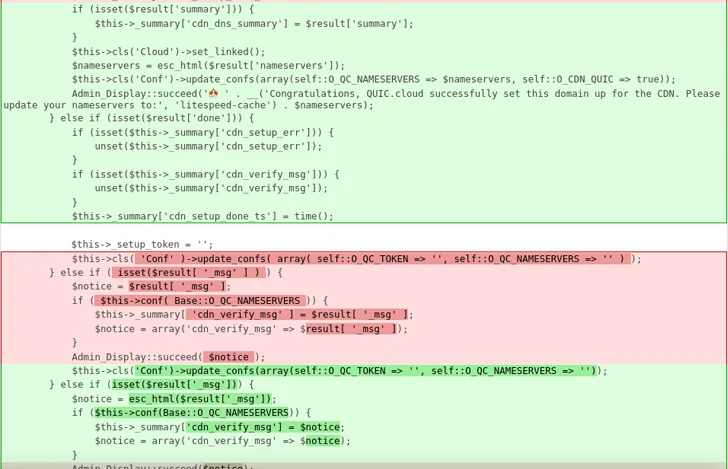
WordPress LiteSpeed Plugin

The disclosure arrives four months after Wordfence revealed another XSS flaw in the same plugin (CVE-2023-4372, CVSS score: 6.4) due to insufficient input sanitization and output escaping on user supplied attributes. It was addressed in version 5.7.

“This makes it possible for authenticated attackers with contributor-level and above permissions to inject arbitrary web scripts in pages that will execute whenever a user accesses an injected page,” István Márton said.

Found this article interesting? Follow us on Twitter  and LinkedIn to read more exclusive content we post.


[ad_2]

Recent Posts

  • Cybersecurity Leadership in 2026: Executive Decisions that Drive Resilience and Growth
  • Implementing a Hacker’s Mindset: Build a Security Culture That Hunts, Learns, and Wins
  • The Future of Cybersecurity Leadership: Integrating Military Discipline and Strategic Thinking
  • Prioritize to Win: Optimizing Cyber Risk for Maximum Business Impact
  • Lead Before the Breach: How Executives Prevent AI-Driven Cyber Attacks

Recent Comments

No comments to show.

Archives

  • February 2026
  • July 2025
  • May 2025
  • April 2025
  • March 2025
  • February 2025
  • January 2025
  • December 2024
  • November 2024
  • October 2024
  • September 2024
  • August 2024
  • July 2024
  • June 2024
  • May 2024
  • April 2024
  • March 2024
  • February 2024
  • January 2024
  • December 2023
  • November 2023
  • October 2023

Categories

  • Cyber News
  • Uncategorized

Book Dewayne Hart for your next event

  • Dewaynehart@dewaynehart.com
  • (470) 409 8316
Facebook-f Linkedin-in Youtube X-twitter Globe
© 2025 Dewayne Hart | Cybersecurity Leadership & Innovation